|
|
|
|
|


|
Regional Meeting on
Experiences & Best Practices in Environmental Information Development and
Management in |
Disrt. LIMITED UNEP/ROWA/AGEDI/RMEIDM/RS
17 January 2005 ORIGINAL: ENGLISH |
Regional Study
PERSGA Report
By
Ahmed Abdel Rehim
________________
Note: This document has been
reproduced in the form in which it was received, without formal editing. The
opinions expressed are those of the author and do not necessarily reflect the
views of UNEP.
Table of Contents
4 Status
of environmental data and information.
5 Effectiveness
and efficiency of current information systems (include strengths and
weaknesses)
7 Assessment
of general requirements
8 Regional
and international cooperation (including UNEP and other UN agencies)
9 Opportunities
for the future
10 Lessons
learned and experiences
11 Recommendations
of priorities for action. Please consider the following
Integrated Information Management System (IIMS) of the Regional
Organization for the Conservation of the Environment of the
Member States (
TASK-1
What are the focus areas for environmental data and
information in your institution/ country, or region (as applicable to your
case)?
Maritime Pollution
International Conventions
Hydrographic Surveys and Navigation Aids
Traffic Routing Measures
Vessel Traffic Systems
Contingency Plans
Pollution Response Centres
Port Rules/GMDSS
Marine Accidents and Incidents
Oil spill
Harbours
Anchorages
Navigational hazards
Coastal navigation,
Living Marine
Resources
Finfish data
Ornamental Fish data
Sharks data
Licensing system and recordings of fishing effort
Fishermen and fish markets.
Information on stock levels.
Ornamental (Aquarium) Fisheries
Habitat and
Biodiversity
Coral reefs
Sea grass
Mangroves
Marine Turtles
Breeding Seabirds
Marine Protected
Areas
1. Bio-physical Information
· Types, and extent, of ecosystems and habitats occurring within the MPA, including open water, coral reefs, other sub tidal habitats, beaches, rocky shores, sabkha, mangrove, sea grass, inter tidal, salt marsh, wetland
· The flora and fauna of each of these habitats
· The structure and extent of coral communities and other benthic communities
· The composition of fish assemblages associated with the coral communities and other benthic communities
· Areas that are unusually rich in biodiversity within the boundaries of the MPA, i.e. areas with a high diversity and richness of a particular group; areas with a high diversity and richness of several groups
· Areas used by fishes for spawning, and as juvenile nursery areas
· The distribution of sea turtles, dugong, other marine mammals, and of habitats used by these groups
· Seabirds, and the areas used by them for feeding and nesting
2. Resource Use Information
· The types of uses made of the living marine resources occurring in the area, the locations where these uses occur, and the intensity of use in each of these locations
· Species caught by fishermen, and any seasonal patterns in species targeted
· Historical records of catch and effort for species caught
· The types of fishing equipment used by fishermen
· The locations of fishing camps
· Seasonal patterns in the use of living marine resources
· Areas important for recreation and tourism, and the levels of usage
· Areas important for research and education
· Use of the area for navigation, shipping (including anchorages and ports), defence
· Areas with traditional and cultural significance
3. Socio-Economic Information
· Locations of towns, settlements, and their populations, within the MPA or adjacent to the MPA
· Numbers of people engaged in each of the resource usages, and whether they work seasonally or full-time in these activities
· The economic significance of the area for each of the uses
· The income derived by users of resources within the MPA
· Population growth rates and levels of education
· The use of customary or traditional management practices
· The role of local sheikhs in the local community and in resource usage
· The presence of other significant individuals (such as chief fishermen)
Integrated Coastal
Zone Management
historical sites, administrative districts &borders, fuel stations, fishing villages, fish-landing sites, fibre-glass factory, desalination plant, fishing areas, ice factory, public and private beaches, public roads, tourism projects, harbours ,coral reefs , sea grass beds, turtle and bird nesting ,sites, vegetation, wetlands, sandy and rocky coasts, islands, sensitive areas, landfills, dredging, sewage ,outfalls and cooling water areas. Populated Place, Railroads, Roads, Utilities, Drainage, Hypsography, Land Cover, Physiographic, Cultural Landmark, Agriculture, Ground Water, Land Use, Soil, Hydrographic Networks, Reservoir, Vegetation
What is the
environmental information needs common across stakeholder groups in your
country (region)?
· Strengthen the capacity of environmental assessment through reliable environmental information at the national and regional levels.
· Strengthening regional environmental information systems through the standardization and updating of databases, Development and implementation of graphic information systems (GIS), to facilitate data exchange
· The need for data sharing mechanism across the region
· The need for common environmental Indicators across the Red Sea Region
· Linking the environmental data with Policy
· Engaging the science/research community in data gathering
Is there a national
(regional) environmental information system, initiative, programme, project,
etc., that address those needs? When it started and when it will be completed?,
who is overseeing it?
The Global
Environment Facility (GEF) Council approved the Project Brief for the Strategic
Action Programme for the
• Component
1. Institutional
Strengthening to Facilitate Regional Co-operation
• Component 2. Reduction of
Navigation Risks and Maritime Pollution
• Component 3. Sustainable
Use and Management of Living Marine Resources
• Component 4. Habitat and
Biodiversity Conservation
• Component 5. Development
of a Regional Network of Marine Protected Areas
• Component 6. Support for
Integrated Coastal Zone Management
• Component 7. Public
Awareness and Participation
• Component 8. Monitoring
and Evaluation of Programme Impacts
Under
Component 6 of the SAP “Support to Integrated Coastal Zone Management”, a
regional Geographic Information System (GIS) was established. It has started on
2001 and ended 2004. PERSGA is now administering all the GIS databases including
the Internet Map server which was established to provide the region with
spatial data.
What are the strengths
and weaknesses of current public information systems and services provided in
your country (region)?
Strengths:
The SAP and PERSGA regional GIS system:
· The system was developed in a participatory approach allowing all the participating countries to enhance the system.
· The system tries to standardize all the data coming from the national level.
· The system created a Network of specialised team to maintain and update the data.
· SAP has set a regional standard for the creation of marine protected areas
· Regional surveys were conducted to collect the data from countries using the same methodology
· Sustainability of the systems is considered as it is maintained at the regional and national level.
· The system was targeting the priority needs of member countries.
Weaknesses:
· Lack of Timeliness of data delivery
· Redundancy of data
· Different data formats despite of the ongoing standardization efforts
· Data custodianship
· Integration with other systems
What are the preferred information acquisition
methods? Internet, CDs, printed materials, etc.
No
regional survey has been conducted to get an accurate answer to this question,
however, a large number of hits have been counted at PERSGA Internet Map server
. Downloading of PERSGA reports was also common across countries of west
What are the constrains and barriers to access
environmental information in your country (region)?
· Access to Internet
· Data sharing between countries/ Ministries/ Academic Institutions
· Time series data is not available in most cases
· Lack of data sharing mechanism among countries and within the same country
Is there a national
programme or project on environmental indicators? Please provide titles,
starting and ending dates, thematic areas covered, indicate whether it has been
successful and why?
·
PERSGA has started to collect
environmental indicators from all member countries. However, there is no agreed
set of agreed upon indicators among
Are there any monitoring
programmes aiming at collecting data and filling in data gaps, what the
thematic areas it cover?
PERSGA Sustainable Development
Indicators Information System SDIS will also act as a monitoring tool to
identify the data gaps in member countries. PAERSGA regional GIS system can
also act as a monitoring tool as it currently identifies the spatial data gaps
in
Does your country
(region) produce state of environment (environment outlook) reports? Please give
dates produced; what is the information sources being used in producing this
report?
Environmental assessment is one of the
basic activities which underlie and facilitate the implementation of the other
components of PERSGA Strategic Action Plan.
The identification of the present quality of the marine environment and
the factors currently influencing its quality and- having an impact on human
health were given priority together with an assessment of expected
developments. Although some basic data on the marine environment has been
collected by some institutions in the region, much remains to be done in the
region as a whole. Therefore, a co-ordinated basic and applied regional marine
sciences programme including a marine meteorological programme will be formulated
as a basis for the protection of the marine environment of the region. In
formulating the operational details of these programmes, planned and ongoing
national and regional programmes will be taken into account.
The following programmes are recognised as components of the co-ordinated
regional environmental assessment programme:
(a) Survey of national capabilities of
the region in the field of marine sciences, including marine meteorology,
covering:
(i) Scientific and administrative institutions;
(ii) Information centres and data sources;
(iii) Research facilities and equipment;
(iv) Manpower;
(v) Existing environmental laws and regulations;
(vi) Ongoing and planned activities;
(vii) Publications.
(b) Assessment of geological and geophysical processes
such as sedimentation contributing to or modifying, the fate of pollutants in
the region, and their impact on human health, marine ecosystems and human
activities, as well as effects of coastal and deep sea engineering and mining.
(c) Assessment of the origin and magnitude of oil
pollution in the region comprising base-line studies on the sources of oil
pollution and the transport and distribution of oil and petroleum hydrocarbon
pollution.
(d) Assessment of the magnitude of
pollutants affecting human health and marine ecosystems of the region
consisting of:
(i) Survey of land-based sources of industrial and municipal wastes
discharged directly or indirectly into the sea or reaching through the
atmosphere;
(ii) Studies on the impact of industrial and municipal wastes on human health
including micro-organisms;
(iii) Research-on effects of pollutants and other human activities, such as
dredging and land reclamation on important marine species, communities and
ecosystems;
(iv) Base-line- studies and monitoring of the levels of selected pollutants, in
particular heavy metals, in marine organisms.
(e) Assessment of factors relevant to
the ecology of the region and to the exploitation of its living resources
including:
(i) Survey of environmental parameters of the coasts of- the- region and-
dissemination of data collected, including vegetation cover, fauna
distribution, weather conditions and community habitations;
(ii) Biology of coral reefs and marine species especially those of commercial
importance such as fishes including crustaceans, molluscs and their stock
assessment and the biology of other marine organisms threatened by extinction;
(iii) Plankton productivity and distribution.
Data sources: The agreed programmes will be executed, primarily, through existing national institutions within the framework of regional co-operation keeping-in mind that for some projects a training programme should be formulated. The assistance of experts from outside the region might be required in the initial phases of some projects but giving priority to local experts.
Operational details of each programme was developed primarily by experts
nominated by the governments of the region. The execution of approved
programmes shall begin only after due adoption by governments of documents
containing their operational details and nomination of national institutions
participating in their implementation.
Please give
recommendation to improve public access to environmental data at the local,
national and regional levels (address the following aspects policy,
institutional, technical, financial, sustainability).
· Improve access to environmental data and information for scientists and decision makers by publishing the national and regional projects results on the internet
· Improve access to data that already exists.
· develop a programme to rescue environmental data currently at risk of being lost.
· Assist in developing standards for data documentation, data quality, and network connectivity.
· Modernize and interconnect environmental data systems throughout the region to increase their capability and responsiveness.
· General legal framework supporting access to information.
· Enhance the Quality of information supporting participation in project-level decision-making
·
Increase the Public participation
level in drafting environmental legislation
· Enhance the Public participation in implementation and review of policy, strategy, plan, program, or legislation related to data and information
· It is very crucial to enhance the interdepartmental cooperation to ensure the success of any environmental information system. It is also very important to involve all departments with the initial development of the system to ensure that all data sources have been identified and to ensure that it will meet the needs of all potential users.
TASK-2
Please identify and provide information on initiatives, programmes, projects, systems, or networks on environmental data and information. You need to give the experience of your own organization too.
For each one, please provide the following:
1-Name: Strategic Action Programme (SAP)
The Jeddah Convention of 1982,
formally titled "Regional Convention for the Conservation of the
The Regional Intergovernmental
Conference also adopted a "Programme for the Environment of the
The Strategic Action Programme, formally launched in 1999, continues to provide a regional framework for continued cooperation on projects relating to the rational exploitation of living marine resources, public health, coordination of water management policies, development of oil spill contingency plans and drafting of guidelines for coastal area development schemes.
Funding for preparation of the Strategic Action Programme has been provided by the
Global Environment Facility (GEF) with implementation support from the United Nations Development Programme (UNDP), United Nations Environment Programme (UNEP) and the World Bank, and execution by the United Nations Office for Project Services (UNOPS). Special support for the Navigation Risk Assessment and Management Plan has been provided by the Government of Norway through an agreement with the World Bank.
- Lead agency: PERSGA
- Purpose, aims, objectives:
Goals
and Objectives
In view of the environmental uniqueness of the coasts and
waters of the Region, the threats they are facing, and the necessity for
actions, the preparation of the Strategic Action Programme (SAP) for the
4.
Users:
In addition to Universities, research Centres, NGO’s Ministries, and private sectors.
- Methods - a description of the work done.
•Reduction of Navigation Risks and Marine
Pollution (NRMP)
This component aims to reduce the risk of maritime accidents in the region and hence minimise marine pollution.
- Hydrographic Surveys,Navigation Aids and Routing Measures
- Development of Contingency Plans
Development and registration of Admiralty Charts to cover all the
PERSGA has completed the
integration of Raster Admiralty Charts which are provided by The UK
Hydrographical Office to cover all the
· Large Scale charts covering harbours, anchorages and navigational hazards, medium Scale - charts for coastal navigation and small Scale - charts for offshore navigation and passage planning. The total detailed charts including different scales could reach more than four hundred charts.
Standard
Navigational Charts (SNCs) are continually updated and are fully corrected up
to date to ensure that they include all safety-critical navigational
information.
The charts can be viewed, manipulated and maintained in PERSGA GIS Project using Arcs Extension and ARCS for GIS which consists of two main software components namely ARCS for GIS Maintenance and ARCS for GIS Viewer. All these extensions are already installed and functioning in PERSGA GIS server.
•Sustainable Use and Management of Living
Marine Resources (LMR)
Development of Training Centres
Development of any sustainable fisheries management
Acquisition of the essential information on stock levels.
Standard data formats were prepared and fisheries enumerators trained in their use.
Data centres have been established at various fish-landing sites in each country.
Data on the Environmental Impacts of Trawling for Shrimp
Data on Ornamental (Aquarium) Fisheries
Development of Living Marine Resources database
PERSGA has developed a user friendly modelling Software that would assist in the data analysis and data entry of the studied Red Sea and Gulf of Aden fishery (Finfish, sharks, Ornamental fishes and Equisetic survey). The Software is intended to possess a complete data base for the above mentioned species and provide in depth analysis and calculation using different models.
The overall objective of the developed program is to assist in the development of a Sustainable Management Strategy for Transboundary Fish Stocks and Invertebrates. The scope of this application is to facilitate the calculation of the different models and to assist in filling the following gaps:
• Lack of information on transboundary stocks.
• Inadequate data on benthic and demersal stocks.
• Unregulated exploitation of high profile species.
• Lack of co-operation in management of shared stocks.
• Lack of training in collection of fisheries data.
• Lack of public awareness in sustainable use of LMR.
• Lack of surveillance and enforcement of existing fisheries regulations.
•Habitat and Biodiversity Conservation (HBC):
- Development of Habitat and Biodiversity
database
- Standard survey methods (SSM) have been
prepared to ensure that data collected from each country is regionally
comparable.
- A survey of the status of mangrove
habitats in
- A regional survey on breeding seabirds
was conducted in
- Development of a regional coral reef survey
- Development of a regional Action Plan
for Coral Reefs in the
- A marine turtle survey was conducted and
data were entered into the HBD information system
Biodiversity Information system has been developed to
provide information for decision makers and researcher about the status of
marine biodiversity species in the
•Development of a Regional Network of
Marine Protected Areas (MPA)
During the development of the SAP twelve areas of regional or global significance were identified that should form the basis of a regional network of marine protected areas. Some are already declared as MPAs, others are still at the ‘proposed’ stage.
Database about Marine Protected areas were linked to a GIS system and available on PERSGA Internet Map server.
•Support for Integrated Coastal Zone
Management (ICZM)
The
SAP is working to strengthen integration of environmental and natural resource
issues into the planning and management of the coastal zone. During 2002 work
was carried out to prepare Model ICZM plans for
•Public Awareness and Participation (PAP)
- Raising the level of participation in environmental conservation by the local communities is a key objective of the PAP component. This is being addressed through the involvement of local NGOs in Community Participation Projects (CPPs).
- Public awareness of marine conservation issues is being raised in the regional school system through the establishment of school environmental or nature conservation clubs, teacher training, and the preparation of an environmental education learning supplement (EELS).
- Pre-assessment surveys have been conducted in Egypt, Sudan and Yemen to study PAP status, to visit relevant organisations, public awareness and environment centres, to meet with national public awareness experts, to establish the PAP Board, and to conduct training-needs assessment and brain-storming workshops with the relevant stakeholders.
- A range of publicity materials were prepared during the year and used at international exhibitions (WSSD Johannesburg and Sharm El-Sheikh).These include four new brochures, a CD, posters and three videos made with the assistance of UNDP-TV.
- Appropriateness of the approach.
The approach was appropriate regardless of the data collection constraints. With clear data sharing mechanism the system of data collection and integration would have been more effective. The public awareness component has played an essential role of informing the public of the usefulness of the project by producing its regular circulars, brochures, and series of news letters (Al Sanbouk) and also by publishing the data on the web site.
- Institutional capacity.
Institutional Capacity of the PERSGA Secretariat: The objective is to build the capacity of PERSGA to enable it to execute the SAP and similar projects -has now been fully met both in terms of personnel and infrastructure. The collected data is now centralised in PERSGA Headquarters and being updated and evaluated by PERSGA. Institutional capacity has been enhanced by increasing the capacity of human resources in dealing with Data issues and by updating the infrastructure of the organizations (computers, data management tools, software etc.)
- Outcomes and benefits expected or achieved.
· Data are collected at the National and regional levels to support the eight components of the programme
· A Regional GIS system was established
·
Remote Sensing data covering the
· Habitat and Biodiversity information system was developed
· Living Marine resources Information system was developed
· PERSGA regional sustainable development information system was developed
· PERSGA GIS indicators was developed
· Four Marine protected areas was created and their data were integrated with PERSGA regional system
· Regional surveys were conducted covering PERSGA components and data were entered the regional system.
- Results (impact).
The major impact was the regional co-operation that was developed throughout the process. The countries co-operated in collecting environmental information at the national level using the same survey forms. Capacity building for human resources of member countries was conducted which has impacted positively on the national capacities in managing environmental information. Public awareness of the current environmental threats was also a great result of the project.
- Effectiveness and efficiency:
The project was efficient in developing a regional action plan for conserving the environment of the Red Sea and Gulf of Aden as it has collected data, studies, GIS and spatial data, references and bibliography of the region, conducted regional surveys as well as enhancing the regional co-operation.
- Discussion on the results in relation to the intensions.
Regional co-operation need to be enhanced in order to achieve the intended goals of the project. However, the results are very satisfactory if compared with other regional and international programmes.
- Lessons learned and experiences
1- Data sharing mechanism should be developed prior to the project implementation
2- There is an urgent need to conduct independent audits of the environmental enforcement program. This will allow countries to identify and correct deficiencies in their enforcement programs, including improving of their national data systems.
3- Attention should be made to assist in developing standards for data documentation, data quality, and network connectivity
4- Public Awareness is a key component of any project implementation. This component should be implemented prior to any data collection activity.
5- Needs assessment mission to the target users is essential to ensure that data and information developed within the programme is actually needed.
2-Name: The Establishment of a Regional GIS
for the Red Sea and Gulf
of Aden
Lead agency: PERSGA
Purpose, aims, objectives:
Under
Component 6 of the SAP “Support to Integrated Coastal Zone Management”, a
regional Geographic Information System (GIS) was established. Basic GIS
technology, which can be applied under a wide variety of conditions, was
introduced throughout the Region. Strengthening GIS capacity in
The aim was to develop an understanding and professional application of GIS as it is a key requirement for the implementation of SAP Components 2 through 7: Reduction of Navigation Risk and Marine Pollution, Management and Sustainable Use of Living Marine Resources, Habitat and Biodiversity Conservation, Establishment of a Network of Marine Protected Areas, Support to Integrated Coastal Zone Management, and Public Awareness and Participation.
The main objective was to use the developed regional GIS as a tool for decision-making and management in coastal and marine environmental conservation, contributing to the timely and effective implementation of the SAP.
Users:
In addition to Universities, research Centres, NGO’s Ministries, private sectors.
Methods - a description of the work
done.
1. To establish a regional team of GIS specialists, this is composed of one GIS specialist from each PERSGA member country. The GIS Technical Team members received advanced GIS training.
2. To conduct a regional assessment of GIS capacities and needs in co-ordination with the regional GIS Technical Team members. PERSGA consultants visited member countries to assess the present use of GIS in coastal and marine environmental management, the need for further capacity building, and requirements to harmonise GIS systems presently in use. Based on the needs assessment report, a detailed work plan for the GIS sub-component of the SAP was prepared.
3.
To develop a regional GIS database, including data assessment, data
collection, verification (quality assessment), standardisation and data entry.
PERSGA has developed a regional GIS database; the database is covering data
related to coastal, environmental and other issues identified in the needs
assessment report that was produced. The database covered all countries in
PERSGA region. The database included Sustainable Development Indicator
Information System, PERSGA Experts and Human Resources database; Institutions
profile database as well as Institutions Activities database.
The above-mentioned database was linked to the
digitized hardcopy maps and transformed into a Geographic Information System.
4. GIS Website for PERSGA was developed, allowing access to the PERSGA GIS database and maps hosted on PERSGA Headquarters. The Website is maintained and updated on a regular basis.
5. To introduce
satellite image analysis, modelling and other GIS applications. These
activities focused on a variety of environmental hot spots.
Appropriateness of the approach.
The approach of conducting needs assessment mission to member countries prior to the start-up of the activities was very useful. It was also very appropriate to form a regional team of experts to maintain the system at the regional level. The conclusion is that the developed regional GIS system was conducted in a participatory approach which helped the feel of ownership among member countries.
Institutional capacity.
The major step that was conducted in the process of the
establishment of a Regional Geographic Information System is the analysis of
information needs. The questionnaire/survey that was distributed among the
visited institutions provided PERSGA with a complete overview of the degree in
which data are available or needed. The development of common harmonized
topographic data sets for the red sea and
A needs assessment of PERSGA Headquarters and member countries were conducted. The objectives of the mission were to assess PERSGA and member countries information system and recommends enhancement in terms of hardware, software, and network capabilities. The following activities were conducted:
- Survey of available data, information systems, computing facilities, hardware, software, and local area network infrastructure
- Assessing Internet accessibility infrastructure
- Assessing Financial Management Information System
- Development of Intranet Information System
- Development of PERSGA Library
- Development of PERSGA centralized Filing system
The project provided capacity building for both Institutions and human resources. Experts from member countries were trained on GIS Remote Sensing, Database management systems. According to the needs assessment report, some Institutions received a hardware and software to enhance the Institutions capacity.
Outcomes and benefits expected or
achieved.
- developments
for Remote Sensing data covering
- Development and registration of Admiralty Charts to
cover all the
- Updating the regional GIS system with PERSGA’s member country data
- Develop GIS data for Integrated Coastal Zone Management
- Development of GIS and remote sensing data for the establishment of a Network of Marine Protected Areas-MPAs
- Develop a GIS for Sustainable Use and Management of Living Marine Resources
- Biodiversity Information System (BIS)
- Developing of PERSGA GIS web
- Sustainable Development Indicators Information System (SDIS)
- GIS based Indicators
- PERSGA Internet Map server
Results (impact).
The developed regional GIS system had a great impact on the member countries Institutions in terms of upgrading the data analysis tools within the institutions as well as upgrading the human resources knowledge and expertise in dealing with the state of the art technologies in the field of coastal zone management. The project has a positive impact on the regional co-operation in the field of data sharing.
Effectiveness and efficiency:
The PERSGA Regional GIS system was efficient to establish a regional network and to act as a melting pot for national GIS data. Its effectiveness resulted from its capability of enabling multiple users connecting to the same data sets remotely through the Internet Map server. This allowed a large number of users connect to the same data sets to evaluate, update and analyse the data.
Discussion on the results in
relation to the intensions.
The intention was to use the developed regional GIS as a tool for decision-making and management in coastal and marine environmental conservation, contributing to the timely and effective implementation of the Strategic Action Plan of PERSGA. The degree of using the system as a decision support tool has not been yet identified. The system has been widely used at the technical level in member countries. It is highly recommended to invite the decision makers to use the system in managing the coastal environment. This can be achieved through the public awareness component of the SAP and by conducting round table discussion involving decision makers in member countries to introduce the final version and to show the capabilities of the developed tools.
Lessons learned and experiences
Data Standardization is a key issue in the success of any regional GIS project.
There is a need for
pre-identifying what resources is necessary for utilizing GIS in each country
in relation to coastal management. Some countries have numerous spatial data
sets that could have enhanced its ability to manage its coastal areas.
Unfortunately, some countries
lacked the manpower to utilize GIS technology and many local government
employees are required to take on additional responsibilities. To ensure that
GIS can be utilized, plans should address all resource issues related to GIS,
including manpower, space, and equipment.
Essential
elements of developing any regional GIS project are data collection, data
verification, and data maintenance. Member countries should devote adequate
resources to ensure that all are accomplished.
The
importance of regional and interdepartmental cooperation was also a critical
element to ensuring the success of the GIS development. It is very important to
involve all departments with the initial development to ensure that all data
sources have been identified and to ensure that the GIS will meet the needs of
all potential
users.
3-Name: Red Sea and Gulf of Aden Marine Turtles Information System
Lead
agency: PERSGA
Purpose,
aims, objectives:
The objective
of this information system is to provide information about the existing species
of marine turtles in the
Users:
In addition
to Universities, research Centres, NGO’s Ministries, and private sectors
Methods -
a description of the work done.
Appropriateness
of the approach.
The system is still in the testing phase.
Institutional
capacity.
The system was installed in PERSGA Headquarters; training was conducted to PERSGA Lead Specialist who has mandated to test the system.
Outcomes
and benefits expected or achieved.
It is expected to use the Standard Survey Methods to
enter all the data to the system. This is to ensure that data collected from
each country is regionally comparable. Following the design stage, regional
teams of experts are being trained in each of the standard methods. A survey of the status of mangrove habitats
in
Results
(impact).
The impact of the system is to use the standard methodology of collecting Turtle information (Standard Survey Methods). This will ensure that data collected from each country is regionally comparable
Effectiveness
and efficiency:
The system is still
in the testing phase
Discussion
on the results in relation to the intensions.
The system will be
distributed to member countries. It is premature to measure the results in this
stage.
Lessons
learned and experiences
There is a need for regional co-operation especially when it comes to Habitat and Biodiversity conservation. This will allow conducting an accurate assessment of the status of the species.
Publishing the data on the Internet is essential to ensure that a large number of users will benefit from the system. It will also inform the public of the findings of the analysis.
4-Name: Red Sea and Gulf of Aden
Birds Information System
Lead agency: PERSGA
Purpose, aims, objectives:
The objective of this information
system is to provide information about the existing species of Birds in the
Users:
In addition to Universities, research Centres, NGO’s
Ministries, and private sectors
Methods - a description of the
work done.
A regional
survey on breeding seabirds was conducted in
Appropriateness
of the approach.
The system has not been tested
Institutional
capacity.
Training will be available to PERSGA Staff as well as to resources in member countries. The software will improve the Institutions capability of analyzing the developed data.
Outcomes
and benefits expected or achieved.
The system has not been tested
Results (impact)., Effectiveness
and efficiency:, Discussion on the results in relation to the intensions, Lessons learned and experiences
The system has not been tested
5-Name: Development of Remote Sensing data covering Red Sea and Gulf of Aden Region
Lead agency: PERSGA
Purpose, aims, objectives:
To introduce satellite image analysis, modelling and
other GIS applications. These activities focused on developing a regional
Remote sensing data covering the coastal zones of the red sea and gulf of Aden
. A variety of environmental hot spots was also targeted using high resolution
images. The main objective was to use the Satellite data to verify the GIS data
collected and to be used to develop applications (Impact of coastal development on ecosystem, Change detection, Image
classification of Marine protected areas)
Users:
In
addition to Universities, research Centres, NGO’s Ministries, and private
sectors
Methods - a description of the
work done.
PERSGA has
finalized the integration of Landsat data to cover all
Appropriateness
of the approach.
The approach was appropriate as it was targeting the specialist in the region. The data is available to all users with special permission from PERSGA. The approach was to integrate all the scenes to cover the red sea coast line then use it for any other developed applications. The approach was very successful as the data was extremely useful for many other applications.
Institutional
capacity.
Several training course were conducted for specialists from member countries as well as PERSGA lead specialists. Hardware and software were installed at PERSGA Headquarters and other selected member countries.
Outcomes
and benefits expected or achieved.
A complete remotely sensed data covering the
Results
(impact).
The major impact of the integrated data is it allows for regional temporal analysis. This might enhance the national and regional capacities in analysing costal and marine data.
Effectiveness
and efficiency:
The system was efficient in providing the required data for other applications. Several countries have made use of the developed data for its national analysis.
Discussion
on the results in relation to the intensions.
Results were satisfactory however; more
applications need to be developed to make use of the capabilities and diversity
of the data.
Lessons learned and experiences
Time series data is very important in
developing remotely sensed data archive.
Internet Map server plays a crucial role for
publishing the Remote sensing data allowing large number of users benefiting
from the developed data sets.
Extensive Capacity
building and training courses for remote sensing applications should be
conducted.
Data should be
updated regularly.
Remote sensing was
crucial to the planning, modelling, and analyses. Innovative remote sensing
methods and applications expanded the understanding of the coastal area
management.
The available data
provides a scientific resource, and opportunities to further advance knowledge
of marine and coastal applications in the region.
The developed set of images provides the first step in establishing appropriate strategies for the validation for any GIS data.
The results suggest that the system is both efficient and accurate
for long-term or large-scale monitoring of coastal ecosystems.
6-Name: Red
Sea and Gulf of Aden Living Marine Resources
Lead agency: PERSGA
Purpose, aims, objectives:
PERSGA has
developed user-friendly modelling software to assist in the data analysis and
data entry of the studied
Users:
In addition to Universities, research Centres, NGO’s
Ministries, and private sectors
Methods - a description of the
work done.
The overall objective of the developed program is to assist in the development of a Sustainable Management Strategy for Transboundary Fish Stocks and Invertebrates. The scope of this application is to facilitate the calculation of the different models and to assist in filling the following gaps:
· Lack of information on transboundary stocks.
· Inadequate data on benthic and demersal stocks.
· Unregulated exploitation of high profile species.
· Lack of co-operation in management of shared stocks.
· Lack of training in collection of fisheries data.
· Lack of public awareness in sustainable use of LMR.
· Lack of surveillance and enforcement of existing fisheries regulations.
Four modules were developed within
this software namely: Finfish module,
Sharks module, Ornamental fish module, and Equisetic survey module.
Studies have been
conducted to assess the environmental impacts of trawl fishing within the
region. Initial work was conducted from Gizan (
Compiled and
submitted to PERSGA LMR technical staff for entry into the LMR database. The
data was linked to the GIS system.
Appropriateness
of the approach.
The approach
was to develop an information system about Living marine resources in the red
sea. The main approach was to involve the grass route fishermen in assessing
the currently fish effort and stock levels. The involvement of the fishermen by providing data through filling
out forms and enter the data into the system is a unique experience in the
region.
Institutional
capacity.
One of the prerequisites for the development of any sustainable fisheries management plan is the acquisition of the essential information on stock levels. Standard data formats were prepared and fisheries enumerators trained in their use. Additional technical and logistical support has been provided. Data centres have been established at various fish-landing sites in each country. The necessary equipment (computer hardware, software, peripherals) has been procured to establish four data.
Outcomes
and benefits expected or achieved.
·
Production of the “Status of
Living Marine Resources in the RSGA” report
·
Development of database of Living
marine resources
·
Calculating fishing catch and
effort
·
Provide information on transboundary stocks
·
Provide data on benthic and demersal stocks
Results
(impact).
Development of a Sustainable Management Strategy for
Transboundary Fish Stocks and Invertebrates
Assist in establishing the Legal and Policy Framework
for Conservation and Sustainable Management of -Living Marine Resources
Effectiveness
and efficiency:
The system was effective as it is the first system
that involves the fishermen to collect the data in standard forms in all member
countries. The system calculates the catch and effort as well as calculating
the over fishing.
Discussion
on the results in relation to the intensions.
Results are very satisfactory. The intension was to build a system which focuses on ecosystem health and biodiversity conservation, including environmental and socio-economic information, which was achieved by the LMR model.
Lessons learned and experiences
- Any modelling system is useless if data is
not available
- Spatial referenced data should be provided
to enhance the analysing capabilities
- Involving the local governments and
individuals in developing data sets is possible and achievable.
- A sense of ownership was observed as a
result of the public participation in developing the data.
7-Name: Establishment of a Regional Network of Marine
Protected Areas
Lead agency: PERSGA
Purpose, aims, objectives:
• Establishment of a regional network of experts
specialised in MPA planning and management.
• Increased human capacity in MPA management through regional training and
exchange programmes.
• Completion of site-specific management plans, supported by detailed habitat,
biodiversity and resource use surveys, and public consultation.
• Effective implementation of a network
of representative MPAs.
• Establishment of a process of regular regional review meetings with exchange
of data, information and management expertise.
Users:
In addition to Universities, research Centres, NGO’s
Ministries, and private sectors
Methods - a description of the
work done.
The
network contains examples of all major biogeographical sub-units of the Region
and major habitat types within each sub-unit. It includes prime examples of the
full range of coastal and marine habitat types and species communities.
All countries in the Region have designated MPAs, but they are few in number
and only one or two are adequately managed. Many of the current and/or proposed
protected areas are under high pressure from fishing and tourism; others are at
risk from navigation and development activities in adjacent areas. To avoid
designating more MPAs than can be managed, the proposed programme emphasises
institutional and capacity building, including resource mobilisation. The
programme is designed in a way that the experience gained during this regional
exercise which allows each country to introduce conservation management to the
full set of MPAs in its territory.
Biological, resource and socio-economic surveys were
carried out at the proposed MPAs in
All field survey data have been entered into a GIS database and used to create point maps illustrating the distribution and status of resources. The surveys included the use of remote sensing data from the Landsat 7 Enhanced Thematic Mapper satellite to map the broad distribution of habitats and biotopes throughout the survey areas
All data of
the three Marine protected areas of Isles des Sept Frères & Ras
Siyyan-Djibouti, Mukkawar (Magarsam)
Appropriateness
of the approach.
The approach was to develop regional capacity in all aspects of MPA planning and management. The approach was appropriate to involve local communities and
Stakeholders as partners in Marine Protected Area management as many local authorities were involved in data collection.
Institutional
capacity.
Prior to the execution of the surveys, the necessary equipment (diving kits,air compressor, generator and camping materials) were procured and forwarded to the relevant authority in each country. In each case survey work was led by the national authorities.
Twenty-three participants from the PERSGA member countries were trained
on Marine Protected Areas Management.
The national counterparts in the MPA surveying teams were given training sessions on survey techniques, GIS and remote sensing before executing their work in each country. On-the-job training continued during the survey activities.
Outcomes
and benefits expected or achieved.
· A Regional Master Plan was prepared in accordance with current international guidelines and tailored for the regional environmental and socio economic conditions.
·
Map Service for the three Marine
Protected areas for
· A regional network of experts specialised in MPA planning and management was established
Results
(impact).
-Regional Networking
-Master Plan for MPAs
-Exchange of Information between Decision Makers and Building Commitment
Effectiveness
and efficiency:
The Network was efficient as it resulted in establishment
of a regional network of experts specialised in MPA planning and
management. It was also effective to enhance public awareness of the marine resources
and biodiversity of the
Discussion
on the results in relation to the intensions.
The establishment of an MPA
web site in PERSGA served as a source of information for, and about, MPAs in
the region. The web site contained links to all the MPAs in the Regional
Network and other national MPAs, an electronic document database with reports
and publications and links relevant to the management of MPAs. For countries
with restricted access to the Internet.
Regional MPA Coordinating Committee will act as the vehicle for securing
international development funds to assist in the establishment and declaring
the protected areas.
Lessons learned and experiences
There are significant
differences between the countries surrounding the
MPAs.
Staff exchanges was an important means of training and of gaining experience in alternative approaches to MPA planning and management. A process of exchanging staff amongst MPAs in the region, and with MPAs in other regions took the highest priority and provided satisfactory results.
Establishing relationships with other MPA’s networks and arrange for exchange visits by staff is a key element in gaining the required experience and to learn from others.
Data sharing is very important. These include networks
from outside the region (
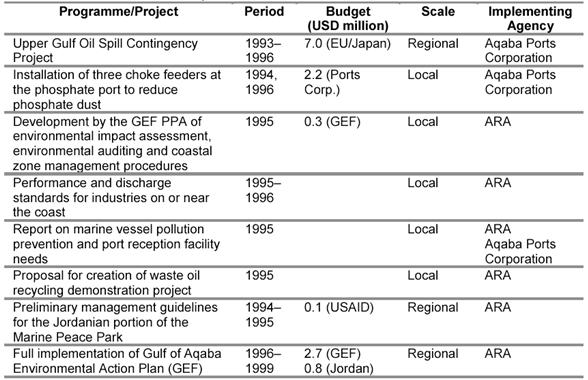
ANNEX I: National Initiatives
Environmental
Source: Strategic Action Programme for
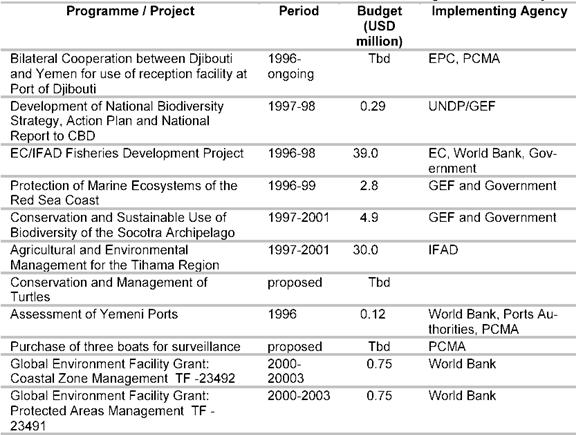
Environmental
Source: Strategic Action Programme for
TASK-3
Integrated Information Management System (IIMS) of the Regional
Organization for the Conservation of the Environment of the
1 Executive summary
The Jeddah Convention of 1982,
formally titled "Regional Convention for the Conservation of the
The Regional Intergovernmental
Conference also adopted a "Programme for the Environment of the
The Strategic Action Programme, formally launched in 1999, continues to provide a regional framework for continued cooperation on projects relating to the rational exploitation of living marine resources, public health, coordination of water management policies, development of oil spill contingency plans and drafting of guidelines for coastal area development schemes.
In
the frame work of the Strategic Action Programme, PERSGA is now working on the
establishment of the "Integrated Information Management System –IIMS” for
coastal and marine environmental assessment, planning, monitoring and
management at PERSGA Region. Field Application
of IIMS is covering environmental profiling, strategic environmental planning,
risk assessment, environmental impact assessment and environmental monitoring.
The Integrated Information Management System is organized in a uniform manner
that would speed up generation of data and will be integrated from diverse
resources and visually analyzed using the Geographic Information System,
database management system among many other applications.
In the years of implementation, PERSGA already has achieved tangible successes of implementing its Integrated Information Management System (IIMS) and further significant progress likely will be achieved in the future.
2 Introduction
and background
In view of the environmental uniqueness of the coasts and
waters of the
PERSGA was officially established in September 1996 with
the signing of the Cairo Declaration by all parties to the Jeddah Convention;
its Secretariat is hosted by
On
The Global Environment Facility (GEF) Council approved the
Project Brief for the Strategic Action Programme for the
3 Methodological
approach
The methodology for
this report entails assessing progress achieved for each objective of PERSGA
activities. This comprehensive evaluation serves as a detailed verification of
progress on each objective. To make sure
that objectives for each component are assessed, assessment reports were all
reviewed where all PERSGA staff was nearly interviewed. To prepare for this
report, PERSGA work plans, reports, and other materials prepared by PERSGA,
World Bank, GEF, CEDARE as well as any other agency to carry out any assessment
were collected. Following this, draft analyses and conclusions were circulated
for comment to PERSGA before the final version was prepared. Conducting this report requires cooperation
and enhanced communication among PERSGA staff and CEDARE. PERSGA recognizes that conducting a needs
assessment is the first step in implementing a regional information system for
PERSGA. Consequently, CEDARE consultants visited PERSGA member countries, to
study the issues and considerations for the implementation of a regional
information system for the organization, assess the present use of GIS in
coastal and marine environmental management, explore the need for further capacity
building, and identify requirements to harmonise GIS systems presently in use.
The data and outputs of theses missions were used as background material for
writing this report.
It was very clear from the available material and
literatures that it is the foremost aim of PERSGA to provide maximum benefits
to the countries of the Region and their inhabitants, and to assure
sustainability of Project achievements beyond the duration of the Project. To
achieve these goals, highest priority was given to institutional strengthening
and capacity building. Training and education of various target groups was part
of all Project activities. Specialists from the Region were involved in and
carried out Project activities. International exchange of knowledge and
experience, including establishment of international partnerships, is
considered to be of pivotal importance for the long-term success of the
Project; however, international consultants were only be involved where the
required expertise is not available in the Region. Their main task was to
transfer knowledge and experience. All data gathered by international
consultants were made available to PERSGA and the countries of the Region. The
Project has assigned high priority to the production of training materials and
development of training courses. The training activities were carefully
prepared and targeted appropriately. Selected trainees participated in Project
activities and later on-the-job training to further develop skills. An initial
workshop was held to assess training needs and guide the Project in the
development of appropriate programmes. Other workshops addressed regional
selection and standardisation of methods and techniques for surveys, GIS,
Remote Sensing data collection and management of databases.
Methodologies were designed in a way that they
fulfil the requirements of the Project while being as user-friendly as
possible. The type and range of data to be collected was carefully considered
and quality control received the highest priority.
4 Status
of environmental data and information
4.1 Analysis
of existing initiatives, programmes, projects, systems, and networks
Existing projects,
data collection or Networks within PERSGA are primarily part of one of the
following components:
Component 1. Institutional
Strengthening to Facilitate Regional Co-operation
Component 2. Reduction of Navigation
Risks and Maritime Pollution
Component 3. Sustainable
Use and Management of Living Marine Resources
Component 4. Habitat and
Biodiversity Conservation
Component 5. Development
of a Regional Network of Marine Protected Areas
Component 6. Support for
Integrated Coastal Zone Management
Component 7. Public
Awareness and Participation
Component 8. Monitoring
and Evaluation of Programme Impacts
Under Reduction of
Navigation Risks and Maritime Pollution component which aims to
reduce the risk of maritime accidents in the region and hence minimise marine
pollution, PERSGA has completed the integration of Raster Admiralty Charts
which are provided by The UK Hydrographical Office to cover all the Red Sea and
Under Sustainable
Use and Management of Living Marine Resources component, PERSGA has
developed a user friendly modelling Software that would assist in the data
analysis and data entry of the studied Red Sea and Gulf of Aden fishery
(Finfish, sharks, Ornamental fishes and Equisetic survey). The Software is
intended to possess a complete data base for the above mentioned species and to
provide in depth analysis and calculation using different models. The overall
objective of the developed program is to assist in the development of a
Sustainable Management Strategy for Transboundary Fish Stocks and
Invertebrates.
Under Habitat and
Biodiversity Conservation components, Biodiversity Information
system has been developed to provide information for decision makers and
researcher about the status of marine biodiversity species in the Red Sea and
Gulf of Aden and
Under components 5,
a Regional Network of Marine Protected Areas (MPA) was established. The establishment of a system of MPAs aims at
conserving all ecosystems of the Red Sea and the Gulf of Aden as a whole. The
network therefore contains examples of all major biogeographically sub-units of
the Region and major habitat types within each sub-unit. It includes prime
examples of the full range of coastal and marine habitat types and species
communities. All countries in the Region have designated MPAs, but they are few
in number and only one or two are adequately managed. All field survey data
have been entered into a GIS database and used to create point maps
illustrating the distribution and status of resources. The surveys included the
use of remote sensing data from the Landsat 7 Enhanced Thematic Mapper
satellite to map the broad distribution of habitats and biotopes throughout the
survey areas.
Under Component 6 of
the SAP “Support to Integrated Coastal Zone Management”, a regional Geographic
Information System (GIS) was established. It has started on 2001 and ended
2004. PERSGA is now administering all the GIS databases including the Internet
Map server which was established to provide the region with spatial data. The
aim was to develop an understanding and professional application of GIS as it
is a key requirement for the implementation of SAP Components. The regional GIS
is a tool for decision-making and management in coastal and marine
environmental conservation, contributing to the timely and effective
implementation of the SAP.
PERSGA also developed Remote Sensing data covering Red Sea and Gulf of Aden Region. The initiative was to introduce satellite image analysis, modeling and other GIS applications. These activities focused on developing a regional Remote sensing data covering the coastal zones of the red sea and Gulf of Aden. A variety of environmental hot spots were also targeted using high resolution images. The main objective was to use the Satellite data to verify the GIS data collected and to be used to develop applications (Impact of coastal development on ecosystem, Change detection, Image classification of Marine protected areas).
4.2 Data and
information availability (collectively, sectoral and thematic)
PERSGA data is available in various formats ranging from hard copy reports to digital data, GIS, Remote Sensing data, statistical data on web site and Internet map server. The data was primarily collected through researchers, regional and national studies, national consultants, national and regional surveys as well as field work. The data was categorized according to PERSGA components, countries, thematic or Type. All data was standardizing in PERSGA regional project entitled PERSGA Integrated Information Management System. The available data categorized by components are as follows:
Maritime Pollution: Port State Control of Shipping, Hydrographic Surveys and Navigation Aids, Traffic Routing Measures, Vessel Traffic Systems, Contingency Plans, Pollution Response Centres, Port Rules/GMDSS, Marine Accidents and Incidents, Oil spill, Harbours, Anchorages
Navigational hazards, Coastal navigation.
Living Marine Resources: available data are related to Red
Sea fisheries, Finfish data, Ornamental Fish data, Sharks data, Licensing system
and recordings of fishing effort, Fishermen and fish markets, Information on
stock levels. Ornamental (Aquarium) Fisheries.
Habitat and Biodiversity: Coral reefs, Sea grass, Mangroves, Marine Turtles. Breeding Seabirds
Marine Protected Areas: The required data for this component are categorized into three sections: 1. Bio-physical Information: Types, and extent, of ecosystems and habitats occurring within the MPA, including open water, coral reefs, other sub tidal habitats, beaches, rocky shores, sabkha, mangrove, sea grass, inter tidal, salt marsh, wetland, The flora and fauna of each of these habitats, The structure and extent of coral communities and other benthic communities, The composition of fish assemblages associated with the coral communities and other benthic communities, Areas that are unusually rich in biodiversity within the boundaries of the MPA, i.e. areas with a high diversity and richness of a particular group; areas with a high diversity and richness of several groups, Areas used by fishes for spawning, and as juvenile nursery areas, The distribution of sea turtles, dugong, other marine mammals, and of habitats used by these groups, Seabirds, and the areas used by them for feeding and nesting
2. Resource Use
Information: The types of uses made of the living marine resources occurring in the
area, the locations where these uses occur, and the intensity of use in each of
these locations. Species caught by fishermen and any seasonal patterns in
species targeted, Historical records of catch and effort for species caught.
The types of fishing equipment used by fishermen. The locations of fishing
camps, Seasonal patterns in the use of living marine resources, Areas important
for recreation and tourism, and the levels of usage.
3. Socio-Economic Information: Locations of towns, settlements, and their populations, within the MPA or adjacent to the MPA, Numbers of people engaged in each of the resource usages, and whether they work seasonally or full-time in these activities. The economic significance of the area for each of the uses. The income derived by users of resources within the MPA. Population growth rates and levels of education, the use of customary or traditional management practices.
Integrated Coastal Zone Management: historical sites, administrative districts &borders, fuel stations, fishing villages, fish-landing sites, fiber-glass factory, desalination plant, fishing areas, ice factory, public and private beaches, public roads, tourism projects, harbors ,coral reefs , sea grass beds, turtle and bird nesting ,sites, vegetation, wetlands, sandy and rocky coasts, islands, sensitive areas, landfills, dredging, sewage ,outfalls and cooling water areas. Populated Place, Railroads, Roads, Utilities, Drainage, Hypsography, Land Cover, Physiographic, Cultural Landmark, Agriculture, Ground Water, Land Use, Soil, Hydrographic Networks, Reservoir, Vegetation
4.3 Public
Access
All data are available on PERSGA web site (http://www.persga.org). PERSGA is also produce a Newsletter (AL Sanbouk) which publicizes all PERSGA activities. There are also a series of technical reports available on PERSGA web site. PERSGA Integrated Information Management System provides access to PERSGA Internet Map server which organized in a uniform manner that speed up generation of data and it is integrated from diverse resources and visually analyzed using the Geographic Information System.
4.4 Information
policy and legislations
Countries, organizations
and agencies have applied a wide range of data policies. Copyright, fees,
licensing, liability, and privacy protection have been handled in a seemingly
infinite variety of combinations. However, at present most of the PERSGA member
countries have not developed a signed data sharing agreement. Standardization
and developing of data sharing mechanism is one of the sustainability elements
of PERSGA. PERSGA has developed a mechanism which encouraged countries within
the Red Sea and Gulf of Aden Region to share in the creation, use, and
maintenance of the GIS datasets. This is a multifaceted approach being
applicable to support organizations, institutions, ministries and any other
users at both regional and national levels with updated GIS data sets.
PERSGA envisages the
success of its activity in developing the regional datasets; only when data
sharing will be considered by member countries and ensuring the benefit from
the developed data sets. While PERSGA does not expect identical data or
applications from each of the member countries, however, common standards are
to be agreed upon and should be inter-operable so that it minimizes the
redundancy and helps to promote sharing and understanding of data. It is
obvious that user demand for accessing environmental and coastal data developed
by PERSGA is expected to increase. In this regard, and as the demand for
integration of base map and thematic data is also on the rise, it was
fundamental to develop effective policies and technical methods to efficiently
share geospatial data. A data sharing protocol was developed and sent to member
countries for approval.
4.5 Institutional
capacity for managing environmental data and information
PERSGA
Secretariat played a commendable leadership role in ensuring active Government
participation at both the political/policy and expert levels during the
preparation of the SAP. These were indispensable leverages in the
implementation of the Project and were crucial in the implementation. The objective of building the capacity of
PERSGA to enable it to execute the SAP and similar projects has now been fully
met both in terms of personnel and infrastructure. The collected data is now
centralised in PERSGA Headquarters and being updated and evaluated by PERSGA
staff. Institutional capacity has been enhanced by increasing the capacity of
human resources of PERSGA and member countries in dealing with Data issues and
by updating the infrastructure of the organizations (computers, data management
tools, software etc.)
4.6 Financing
of environmental data and information
Successful implementation of the SAP required that
a range of resources, both human and financial, be mobilised to support the
priorities of the Programme. This was undertaken through a multidimensional
approach that includes seeking funds from bilateral and multilateral donors,
designing self-financing mechanisms for the respective components, and the
potential of establishing an environmental fund.
Support for environment and developing data related
to natural resources management programmes and investments in the Region
traditionally has been provided by national Governments, with assistance from
international and bilateral organisations. The implementation of the SAP
required new types of resources to support such measures in many countries. A
review of the opportunities for self-financing of the different components of
the SAP was carried out at the regional and national level to identify
potential economic sources and mechanisms. Consultations with co-operating
Governments and stakeholders, including the private sector, were regularly
organised.
5 Effectiveness
and efficiency of current information systems (include strengths and
weaknesses)
The
project was efficient in developing a regional action plan for conserving the
environment of the Red Sea and Gulf of Aden.
It has succeeded in issues related to data collection, conducting
regional studies, GIS and spatial data, references and bibliography of the
region, conducted regional surveys as well as enhancing the regional
co-operation.
The Strengths of the system are that the system was developed in a participatory approach allowing all the participating countries to enhance the system. There were also a lot of efforts to standardize all the data coming from the national level. The system created a Network of specialized team to maintain and update the data. SAP has also set a regional standard for the creation of marine protected areas. Regional surveys were conducted to collect the data from countries using the same standards and methodology. High priority was given to the sustainability of the systems as it is maintained at the regional and national level which allows national experts to maintain and update the data regularly.
Weaknesses of the system are mainly the lack of timeliness of data delivery, Redundancy of data, different data formats coming from member countries despite of the ongoing standardization efforts. Data custodianship is a major issue which was not resolved and integration with other national systems is still a major concern. Requested confidentiality of some national data was also another problem. There is also a lack of a common framework approach to ensure that there is synergy among all the various regional activities. There is no infrastructure and supporting mechanisms for a comprehensive and harmonized national sustainable development data foundation. Most of the countries have not developed yet its national spatial data infrastructure.
6 Constrains
and barriers to manage and improve availability and accessibility of
environmental data and information
There is a need to improve user access to data, and to enhance data management and data distribution system through acquiring the state of the art software and hardware. It is also crucial to develop activities that are directed towards interoperability with national systems. There are also no common information management tools to collate data, and to develop regional data compendia from the currently existing data sources. To improve the access of data, more attention should be paid to the currently available newsletters, e-mail and regular update of Internet services, a regional library and an information database should be made available to public.
7 Assessment
of general requirements
It was the foremost aim of the Project to provide
maximum benefits to the countries of the Region and their inhabitants, and to
assure sustainability of Project achievements beyond the duration of the
Project. To achieve these goals, highest priority was given to institutional
strengthening and capacity building. Training and education of various target
groups were part of all Project activities. Specialists from the Region were
involved in and carry out Project activities. International exchange of
knowledge and experience, including establishment of
international partnerships, is considered to be of pivotal importance for the
long-term success of the Project.
7.1 Environmental
priority issues
Regional and national priority issues are function of the
environmental threats the region is facing. The environment and resources of
the Red Sea and Gulf of Aden are threatened by a variety of human activities.
The rate of population and economic growth in the coastal zones of the Region
has resulted in increased pressure on the environment, from dredging and
filling operations, from the disposal of domestic and industrial effluent, and
from the non–sustainable use of freshwater resources. A major contributor to
growth in the coastal zone, and the consequent impacts, is the rapidly
expanding of tourism industry.
Main priority issues:
- Environmental Degradation
- Non–Sustainable Use of Living Marine Resources
- Maritime Traffic, Oil Production and Transport
- Urban and Industrial Development
- Rapid Expansion of Coastal Tourism
- Environmental impacts of free zones
- Expansion of coastal Industries
- Ornamental fish collection
- Excessive use of surface and ground-water
resources
- Destruction of coastal and marine habitats
- Discharge
of partially treated and untreated municipal wastewater.
- Industrial
pollution
- Hazardous
wastes
- Waste
oil disposal
- Disturbance to wildlife and habitats
7.2 Priority environmental information needs
of various groups (stakeholders) to support decision-making
There is a need to develop national portals. The portals will be serving as a hub for providing harmonized data and information deriving from different sources in each country. Standardize Metadata on all available data resources is required. It should be stored and maintained by the respective data custodian. A clearing house mechanism needs to be established to facilitate easy access to metadata which is developed at the national level.
7.3 Technological needs
There is a need to build the capacity to use information and communication technologies (ICT). The technology will facilitate public and various groups, access to information which will result in better environmental decision making process. There is an urgent need to support the developing of data tools for the management of data and information at the sub-national, national, sub-regional, and regional levels. These tools will assist in identifying national data sources, institutions and experts involved in the management of the environmental information.
7.4 Institutional needs (including training
and finance)
There is a clear shortage of technical staff and a
lack of resources, devoted to the overall program. This resulted that PERSGA
technical, many of whom have excellent qualifications is overloaded. There is
also a need for better coordination between parts of PERSGA programs, between
PERSGA and member countries and between different agencies or ministries. A
problem that has observed within PERSGA is that data developed through projects
and studies substitutes for a systematic mechanism for updating of core data
sets and other forms of information exchange. There is a need for capacity
building activities focusing on developing data to assist national integrated
environmental assessment and reporting.
8 Regional
and international cooperation (including UNEP and other UN agencies)
In addition to the donor
coordination role of UNDP and catalytic role of UNEP, specific provisions have
been made in the development of the SAP for direct participation of potential
international, regional and bilateral funding organizations in programme
design, implementation, monitoring and evaluation. It is recognized by PERSGA,
and the cooperating parties, that these organizations can provide financial
support and specialized expertise gained from their participation in other
regional environmental programmes and individual development projects. PERSGA
and the cooperating parties plan to seek the active participation of these
organizations, at the regional and national level, in the identification of
investment activities, development of institutional strengthening programmes
and cooperative preparation of implementation plans. PERSGA will also
coordinate with the Mediterranean Action Programme with regard to cooperation
in a Regional monitoring programme for the Red Sea and Gulf of Aden.
Cooperation
Agreement between PERSGA and ALECSO
It is the organization that initiated
PERSGA. It had implemented the Action Plan until the Regional Organization for
the Conservation of the Environment of the Red Sea and Gulf of Aden (PERSGA)
was formed in accordance with Article XVI of the Convention. Thus it provided
technical and financial support to some national institutions in PERSGA States
which were executing certain projects relevant to the Action Plan.
A Cooperation Agreement was signed
between ALECSO and PERSGA following the formation of PERSGA in 1995. In
accordance with this agreement the following joint activities were implemented:
· Survey
of natural habitats and plans for their protection in Djibouti and
· Upgrading
of Tide Gauges in PERSGA Region (in cooperation with IOC)
· Oil
Pollution Combating Regional Training Workshop (Jeddah, 1998)
· ICZM
Regional Training Workshop (Port Sudan, 1998)
· Environmental
Impacts of Development Projects (Hurghadah, 1999)
· Management
of Solid Wastes in Industrial Areas (Aqaba, 2000)
Memorandum
of Understanding between PERSGA and UNEP
Two programming sessions were held
between UNEP and PERSGA (Jeddah, 25-26 June 1987; Nairobi 2546 April 1989)
during which potential areas of cooperation were identified regarding the
Convention and the steps necessary for reactivating the Action Plan. Such
communication lead to drafting and signing a memorandum of understanding
between PERSGA and UNEP within the above mentioned activities. Activities
included the joint implementation of the following projects:
· Protection of the Red Sea and Gulf of Aden
Environment: Initiation of Marine Pollution Control Policies and Development of
Tools for Coastal Area Management and Capacity Building – Phase 1 (in
collaboration with ALECSO)
· A Review of the Geology of Coral Reefs
· Evaluation of the Status of Marine Mammals
in the Red Sea and
· The State of Marine Environment of the Red
Sea and
· A Review of the Environmental Legislation in
the Red Sea and
· Development of a national Contingency plan
for Sudan.
Memorandum
of Understanding between PERSGA and UNESCO-IOC
A Memorandum of Understanding
was signed by PERSGA and IOC on cooperation in marine environmental protection
(1991). This MoU defines areas where the PERSGA and the IOC have common
interests and objectives in marine scientific problems and, in relation to
these areas, identifies a framework for continuing cooperation, and a basis for
further joint programming between PERSGA and IOC. In this framework of
cooperation, the two organizations worked together in upgrading the tide gauges
in the Red Sea and Gulf of Aden Region and held a regional training workshop on
Sea Level Observation and Data Analysis (Jeddah, 2000).
Co-operation with ROPME: SEA to SEA
The Regional organizations of the Red Sea and Gulf of Aden (PERSGA) and the ROPME Sea Area (ROPME) agreed to convene a conference on the sustainable use of the marine environment. A decision was made that the conference should concentrate on sharing the experiences and resources of the two Regions. It was the intent of the Conference organizers that, rather than convene a highly structured event in which "national" positions were put forward, emphasis would be placed on cross-sectorial views and experiences within the context of each nations' progress towards sustainable development.
Co-operation with The Centre for Environment and
Development for the Arab Region and Europe (CEDARE)
CEDARE
and the Regional Organization for the Conservation of the Environment of the
Red Sea and Gulf of Aden (PERSGA), have formed a strategic alliance for
the implementation of the GIS component pertaining to the implementation of the
Strategic Action Programme (SAP) for the Red Sea and Gulf of Aden. CEDARE, in
its capacity as a leading regional organization, particularly in environmental
information, has been contracted to establish the regional GIS sub-component of
the Strategic Action Programme for PERSGA.
9 Opportunities for the future
The main opportunity is the development of a common vision regarding developing national strategies for environmental information systems. Developing of a regional data standards is also a common main requirement which will enhance regional cooperation. Development of data sharing mechanism will enhance any future co-operation.
10 Lessons
learned and experiences
A review of all national and regional on-going projects and initiatives related to the project should have been conducted prior to the implementation which might have decreased the level of redundancy and improve regional co-operation.
The activities to be carried out under this
project required development of a work plan for Region-wide implementation. In
furtherance of this goal, the SAP is maintained under revised terms of
reference to allow it to oversee implementation and monitor the progress of the
full programme.
Lack of information and access to information is a
continuing constraint for developing an environmental Information systems
within PERSGA region, including insufficient baseline information data and
analysis of available information.
In many cases, data exists in one Institution,
organization, entity or report but is not available to other entities or to the
public. The lack of a tradition of information sharing is exacerbated by the
technical difficulty of dissemination and access.
11 Recommendations
of priorities for action. Please consider the following
11.1 Policy
There is a need for an information exchange
mechanism which enables the exchange of information through servers, website
and database, and periodic newsletter for the region.
It is highly recommended to improve the
understanding of international environment agreements, and of the linkages of
national programmes with these conventions.
Attention should be drawn to technical assistance
for the establishment and implementation of national environmental information
Strategies in many countries of the region as part of the assessment of
environmental information management policies. Support to national Institutions
regarding legislative and policy-making frameworks for data exchange should be
provided.
11.2 Institutional
- Institutional capacity needs to be strengthened in the area of
regulatory environmental policy and environmental oversight.
- Providing administrative services to the national experts as well as
regional expert is highly recommended
- Developing additional regional protocols where needed for in the
SAP.
- Strengthen the capacity of public and private sector to provide
consistent and reliable data to enhance the environmental assessment
processes.
- Provide
countries with the state of the art hardware and software as well as
training on the use of different information systems.
- There
is a shortage of qualified environmental information staff in the region
for planning and follow-up departments.
11.3 Technical
- There is a need for developing national environmental indicators.
It should be noted that the lack of data for any environmental indicator
will not automatically prevent its development of environmental
information systems. However, the
lack of agreed upon set of indicators can make the effort of developing
information system much more difficult and Costly in time and resources.
- It was crucial to prepare a regional environmental education and
communication strategy as part of the thematic programme of PERSGA.
- Establishing an effective regional information exchange system and
databases requires an initial understanding among all countries of the
importance of such systems. The benefits of the outcomes of the system
should be made clear to all countries from the very beginning of the
programme.
- Regional initiatives, projects or studies that
build upon and integrate existing national pilot or prototype activities
are particularly desirable.
11.4 Financial
It is recommended to develop an efficient financing
and resource mobilisation programme.
Given the
limited financial resources of national and local governments, international
organizations, international financial institutions and bilateral donors, it is
necessary that non–traditional financial resources be mobilized to support
implementation of the SAP at the regional and national level.
These alternative approaches could include the use
of environmental fees and fines; tourism taxes; user fees for parks and
protected areas. Public –private cooperation for special activities and use of
funds from private foundations from within and outside the Region is essential
to ensure sustainability. There is an urgent need for the countries to fulfil
their financial commitments to PERSGA.
11.5 Sustainability
Continuing successful implementation of the
Strategic Action Programme requires that a range of resources, both human and
financial, be mobilised to support the priorities of the Programme. This will
be undertaken through a multidimensional approach that includes seeking funds
from bilateral and multilateral donors, designing self-financing mechanisms for
the respective components.
To ensure the
sustainability of the project, capacity building for the human resources was
given the highest priority. Production of training materials and development of
training courses were major activities. The training activities were carefully
prepared and targeted appropriately. Selected trainees participated in Project
activities and later on-the-job training to further develop skills. An initial
workshop was held to assess training needs and guide the Project in the
development of appropriate programmes. Other early workshops addressed regional
selection and standardisation of methods and techniques for surveys, data collection
and development of databases. Methodologies were designed in a way that they
fulfil the requirements of the Project while being as user-friendly as
possible. The type and range of data collected was carefully considered and
quality control received the highest priority.
References
ABDELLATIF, E.M.; EL HAG, A.G.D.; GORE, P.W.; MISHRIGI, S.Y.; KRUPP, F. 1998.
Sudan Country Report.
Report prepared for the Strategic Action Programme for
the Red Sea and Gulf of Aden, PERSGA, Jeddah.
BARRANIA, A. 1997.
Status Report, Egypt. Report prepared for the Strategic Action Programme for
the Red
Sea and Gulf of Aden, PERSGA, Jeddah.
CEDARE,2002. Report on the needs assessment for the Red Sea and Gulf of Aden,
CEDARE, 2003. Environmental
Information Unit Progress report
EL-IBIARY, A.I. 1994. Legal
protection for the environment of the Red Sea and Gulf of Aden. UNEP,
Nairobi and PERSGA, Jeddah.
EL-IBIARY, A.I. 1995.
Legal and institutional arrangements to achieve sustainable development in the
Red Sea and Gulf of Aden and the ROPME sea area. In: Background
Papers to 'Sea to Sea' Conference, Regional
Conference on Sustainable Use of the Marine
Environment, 9-12 October 1995, Jeddah; sponsored by
PERSGA, UNEP, ACOPS, ROPME, pp. 199-213. PERSGA,
Jeddah.
HADDAD, A.M.G.; HARIRI, K.I.; AL-AGHBARI, T.; KRUPP, F. 1998.
Yemen - Country Report. Prepared
for the Strategic Action Programme for the Red Sea and
Gulf of Aden, PERSGA, Jeddah.
LINTNER, S.; ARIF, S.; HATZIOLIS, M. 1995. The
experience of the World Bank in the legal, institutional
and financial aspects of regional environmental
programs: potential application of lessons learned for the
ROPME and PERSGA programs. In: Background Papers to
'Sea to Sea' Conference, Regional Conference on
Sustainable Use of the Marine Environment, 9-12 October
1995, Jeddah; sponsored by PERSGA, UNEP,
ACOPS, ROPME, pp. 163-198. PERSGA, Jeddah.
LINTNER, S.F.; ARIF
S.; HATZIOLOS,
M. 1996. The Experience of the
World Bank in the Legal,
Institutional and Financial Aspects of Regional
Environmental Programs: Potential Application of
Lessons Learned for the ROPME and PERSGA Programs. World Bank,
Morcos, S.A. & Varley, A. (eds) 1990. Red Sea, Gulf of Aden and Suez Canal,
A Bibliography on
Oceanographic and Marine Environmental Research
1775-1984. UNESCO, Paris &
ALECSOPERSGA,
Jeddah. 198 pp.
PERSGA. 1991.
Red Sea and Gulf of Aden Environment Programme. Brochure. PERSGA/ALECSO.
PERSGA/UNEP. 1994. Legal protection for the environment of the Red Sea and Gulf of Aden. UNEP
Regional Seas Reports and Studies No. 163. UNEP,
Nairobi and PERSGA, Jeddah. (In Arabic).
PERSGA/GEF, 1999. Strategic Action Programme for the Red Sea and Gulf of Aden , Project
Implementation Plan,
PERSGA, 2002. Strategic
Action Programme for the Red Sea and Gulf of Aden, 1998
PERSGA/SAP Annual Report
PERSGA, 2002. Implementation
of the Strategic Action Programme (SAP)for the Red Sea and Gulf of Aden.
PERSGA/GEF. 1998.
Strategic Action Programme for the Red Sea & Gulf of Aden. Volume 1.
Main Report.
The World Bank, Washington, D.C. 89 pp. [Volume 2.
Country Reports printed 2001.]
PERSGA/GEF 2002.
A Bibliography of Oceanographic and Marine Environmental Research 1985-1998.
TAWFIQ, N. 1993.
Effective Mechanism for Improving the Implementation of Environmental
Legislation in the PERSGA region. Paper presented at
the seminar on Strengthening Environmental Law and
Legislation in West Asia, 16-21 October 1993, Bahrain,
PERSGA, Jeddah. (In Arabic).
UNEP. 1996.
Workshop on Implementation of the Global Programme of Action for the Protection
of the
Marine Environment from Land-based Activities in the
ROPME and PERSGA Regions. 2-5 December 1996,
Manama, Bahrain, UNEP (WATER) GPA/ROPMEPERSGA/RW.2.
http://www.persga.org/about/projects/SAP/taskforce.asp
http://www.persga.org/about/projects/SAP/Components/1.asp
http://www.persga.org/arabic/Publications/Alsanbouk/Alsanbouk.asp
http://www.jreds.org/index.htm
http://www.unep.ch/seas/main/persga/persga.html
http://www.cbcrc.org/php-bin/members/memberList.php?id=412
http://www.cedare.org.eg/newsletter/Vol8y2001/page_1.htm
Appendix 1
List of agencies and person interviewed:
Appendix 2
List of
conventions used: